CSW70 Side Event - Pan-African Dialogue Focuses on Defining Access to Justice for Women and Girls
The International Association of Women Judges (IAWJ) participated in the CSW70 Pan-African Intergenerational Dialogue on Strengthening Access to Justice for All Women and Girls, a virtual side event held on December 12, 2025, and hosted by Nalafem and Difference She Makes. Bringing together African feminist leaders, legal practitioners, youth activists, and civil society representatives, the dialogue served as an early regional consultation leading up to the 70th session of the UN Commission on the Status of Women (CSW70), where access to justice will be a central theme. Representing IAWJ, Senior Programs Officer Amie Lewis, Head Coordinator of the Women In Leadership In Law (WILIL) Program, moderated one of the breakout sessions as part of the dialogue. 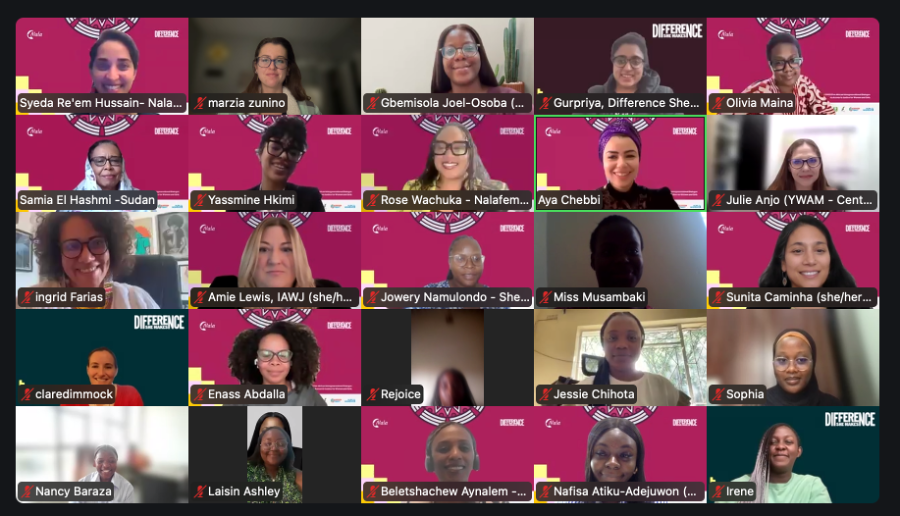
The purpose of the dialogue was to gather perspectives from across the continent, identify challenges, and shape Africa’s contributions to next year’s negotiations. Participants went from young teens involved in feminist organizing to women who attended landmark global conferences decades ago such as the Beijing Conference in 1995, showing the event’s intentionally intergenerational design.
In opening remarks, Nalafem founder and president Aya Chebbi talked about the growing role of young African feminists in shaping continental agendas. She highlighted the importance of women’s leadership in the legal and judicial fields, citing Kenya’s Rose Wachuka, once the youngest Supreme Court lawyer in the country and now Chief of Staff to the Chief Justice, as well as Nalafem Board Chair, as an example of how women’s presence can influence institutional culture.
The meeting’s first speaker, strategist Olivia Maina, introduced The Difference She Makes campaign, which examines the gap between women’s growing entry into the legal profession and their more limited rise to senior positions. She noted that while statistics suggest progress, “women are entering, but not rising,” pointing to ongoing cultural norms and structural barriers. The campaign, launched in 2025, focuses on shifting institutions and systems rather than placing responsibility only on women. Through storytelling and cross-generational engagement across Kenya, Nigeria, South Africa and other countries, it has already reached more than six million people. Rose Wachuka, Chief of Staff to Kenya’s Chief Justice and Board Chair of Nalafem, expanded the conversation by reflecting on her early belief that “the law would set women free.” Over time, she said, she learned that legal systems, though capable of dramatic victories, can still fail women daily. She said that access to justice must be viewed through a feminist lens because legal institutions were not originally designed with women’s rights in mind. Representation alone, she argued, does not break down patriarchal structures. “Inclusion without transformation risks legitimizing injustice with a gentler face,” she said. Wachuka also addressed the question of mentorship, encouraging participants to think of supporting networks as intergenerational and lateral, top-down. “Isolation makes you unsafe,” she said, urging young feminists to seek solidarity and continue building collective spaces for dialogue and organizing. 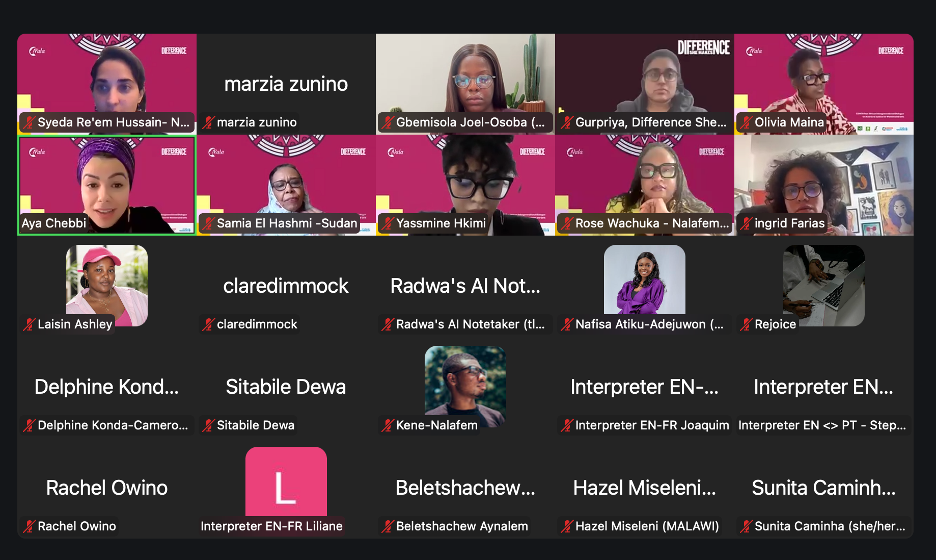
From Latin America, Ingrid Assunção Farias of Instituto Update drew parallels with African movements, noting that women in her region have also led major democratic and rights-based reforms. She called for continued South–South collaboration on issues such as reproductive justice, care work, and responses to gender-based violence.
From Nigeria, Nafisa Atiku-Adejuwon described the impact of violent conflicts in the Sahel region, where displacement, sexual violence, and limited services in IDP camps leave women vulnerable. She called for gender desks, reporting channels, safe spaces, and humanitarian responses that recognize women’s rights as “non-negotiable.”
From Sudan, Prof. Samia El Hashmi spoke about the collapse of justice institutions following the war that began in April 2023. She described widespread sexual, economic, and psychological violence against women and talked about the longstanding barriers such as restrictive personal status laws and the cumbersome “Form 8” requirement in rape cases. She called for comprehensive judicial reform, legal aid, and ratification of key regional and international women’s rights treaties.
From Cameroon, a young woman (who asked to remain anonymous for security reasons) shared challenges stemming from the Anglophone crisis, including restrictions that prevented organizers from even using terms like “judicial” or “discrimination” in official documents. She talked of a rise in tech-facilitated gender-based violence and urged reform of discriminatory laws, gender-sensitive training for police and courts, and clearer legal distinctions to prevent GBV cases from being dismissed as private “family matters.”
From South Africa, Luthando Madhlopa reflected on three decades of democratic transition. Despite strong laws such as the Domestic Violence Act and a progressive constitution, she noted persistent gaps in implementation and called for strengthening institutional accountability.
Closing the plenary, Beletshachew Aynalem of UN Women outlined the African Union’s Common Africa Position for CSW70, developed through consultations across all subregions. The position emphasizes stronger legal frameworks, survivor-centered services, justice-sector capacity building, and improved oversight. It will guide Africa’s engagement at CSW70 in March 2025. Following the plenary, participants moved into breakout circles to explore themes including feminist models of justice, women’s leadership in law, digital gender-based violence, and questions of accountability and power.
While discussions will continue in the coming months, this dialogue marked a key early step in shaping how African feminists will approach next year’s global negotiations on justice for women and girls. The Dialogue culminated in CSW70 Africa Intergenerational Feminist Declaration on Strengthening Access to Justice for All Women